
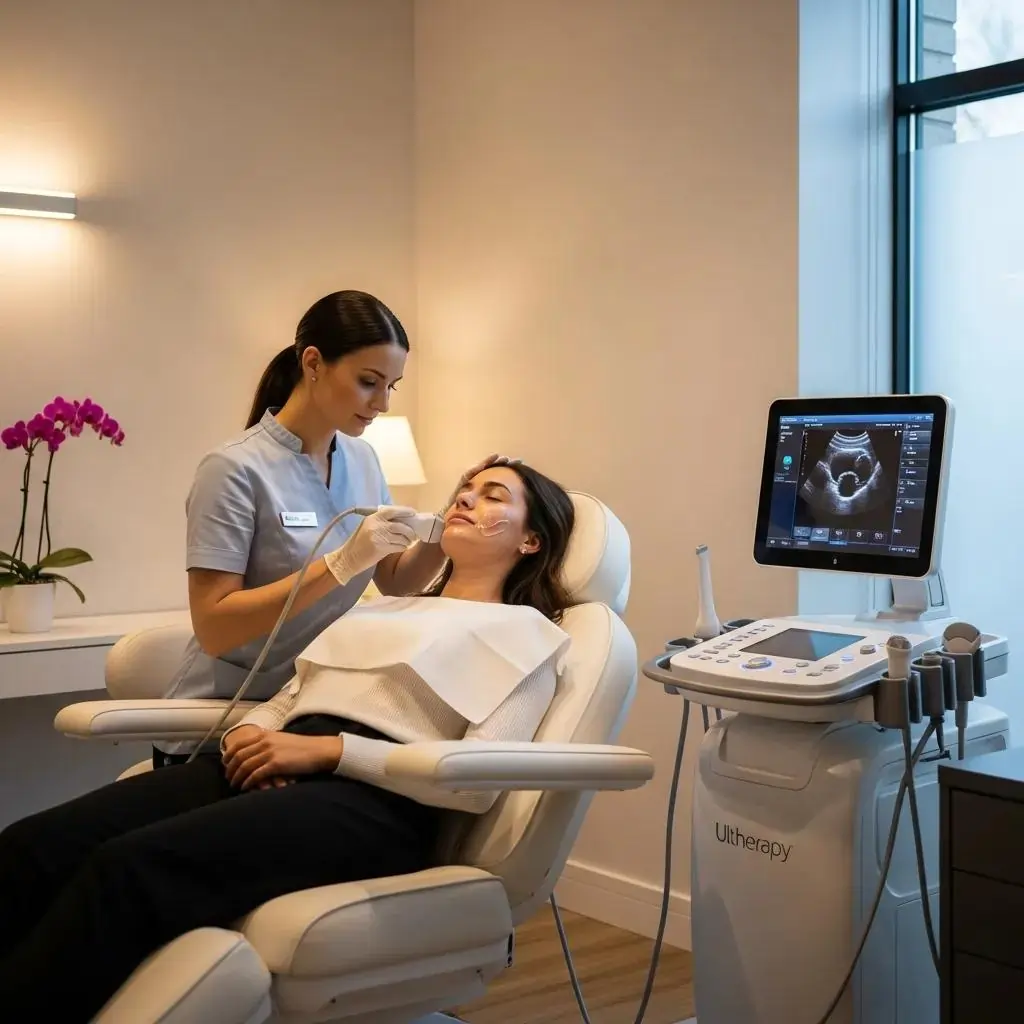
Ultherapy in Sydney – Your clear guide to non‑surgical skin tightening
Ultherapy uses focused ultrasound to lift and tighten skin without surgery. This guide explains how it works, the benefits and risks to expect, how results develop over time, and typical costs in Sydney. If you’re looking for a scientifically supported skin tightening treatment to reduce laxity and restore firmer, smoother skin, Ultherapy is a leading non-invasive option that stimulates your skin’s natural collagen production for gradual, long-lasting improvement.
What is Ultherapy and How Does It Work for Skin Tightening?
Ultherapy is a non‑invasive treatment that delivers focused ultrasound energy to stimulate collagen production deep in the skin. By heating targeted layers beneath the surface, it promotes the body’s natural repair response so skin becomes firmer and more lifted over time. Because the energy reaches deeper tissue, improvements in texture and elasticity appear gradually as new collagen forms, a good option for people who want noticeable results without surgery.
Clinical studies show that micro‑focused ultrasound can effectively trigger collagen synthesis and tissue regeneration by targeting deep dermal and subdermal layers.
Ultherapy: High-Focused Ultrasound for Collagen Stimulation
Ultherapy® is a high-focused ultrasound treatment that stimulates collagen production and skin regeneration by targeting the deep dermal and subdermal layers.
Histological effects of a combined collagen stimulation procedure consisting of microfocused ultrasound, soft tissue filler, and Ca‐
HA injections, K Kaye, 2023
How Does Ultrasound Energy Stimulate Collagen and Elastin Production?
The device creates small, controlled thermal coagulation points in deeper skin layers. That heat prompts a natural healing response: existing collagen contracts, and new collagen is produced over the following months. While Ultherapy’s primary effect is on collagen (the structural protein that firms skin), the treatment contributes to overall tissue tightening and improved contour. The result is a subtle, natural lift rather than an immediate surgical change.
Research explains how these discrete thermal points cause collagen fibres to contract and stimulate new collagen formation, producing meaningful skin tightening.
Ultherapy: Micro-Focused Ultrasound for Skin Tightening
discrete thermal coagulation points cause collagen fibres in the facial tissue to be denatured, contracting and stimulating de novo collagen. This study describes an investigation of Ultherapy for skin tightening of the mid and lower face.
Use of micro-focused ultrasound for skin tightening of mid and lower face, D Shome, 2019
What Makes Ultherapy a Non-Surgical, FDA-Cleared Procedure?
Ultherapy is FDA‑cleared for lifting the skin of the face, neck and décolletage, which reflects controlled clinical testing for safety and effectiveness. Because it’s non‑surgical, there are no incisions or stitches, recovery is quick, and the risk profile is lower than with a surgical facelift. Many patients appreciate that they can return to daily life soon after treatment, a practical choice for those with busy schedules.
Ultherapy’s built‑in ultrasound imaging lets clinicians see tissue layers in real time, helping target energy accurately and supporting strong patient satisfaction with outcomes.
Ultherapy: HIFU with Ultrasound Imaging for Patient Satisfaction
In contrast, Ultherapy is a specific aesthetic application of HIFU (High-Intensity Focused Ultrasound). Unlike HIFU, Ultherapy employs ultrasound imaging to visualise the tissue layers during treatment. Patients were either satisfied or very satisfied with the treatment outcomes.
Patient satisfaction following treatment with micro‐focused ultrasound with visualisation: A retrospective cross‐sectional study, A Bukhari, 2024
What Are the Key Benefits and Risks of Ultherapy Treatment?
Ultherapy offers several practical benefits for skin tightening and rejuvenation. Key advantages include:
- Non‑invasive: No surgery or general anaesthetic, fewer risks and no scars.
- Minimal downtime: Most people return to normal activities straight away.
- Gradual, lasting improvement: Collagen rebuilding continues for up to six months, so results develop naturally.
- Customisable: Treatments can be tailored to the face, neck and décolletage to meet individual goals.
As with any procedure, Ultherapy carries possible side effects. Short‑term redness, mild swelling or temporary tenderness are common and usually resolve within hours to a few days. Rarely, longer‑lasting discomfort or numbness can occur, which is why assessment by an experienced practitioner is important to confirm suitability and plan treatment safely.
At NuuSkin, our advanced aesthetic clinic in Sydney, we offer personalised consultations to help you decide whether Ultherapy is the best path for firmer, smoother skin.
Which Areas Can Ultherapy Effectively Treat for Skin Lifting?
Ultherapy can be used on several areas to improve lift and firmness, including:
- Face: Improves cheek and jawline definition by lifting sagging skin.
- Neck: Tightens loose skin and refines the neck contour.
- Décolletage: Smooths and firms the chest area for improved texture.
This targeted approach lets clinicians treat multiple concern areas in one session when appropriate.
What Are the Common Side Effects and How Are They Managed?
Most side effects are mild and temporary. Typical responses include:
- Redness: Short‑lived flushing that usually fades within hours.
- Swelling: Mild swelling may be present for a few days.
- Discomfort: Some patients feel warmth, tingling or brief aching during and after the procedure.
Symptoms generally settle without intervention. For comfort, clinicians may suggest simple measures such as cold packs or over‑the‑counter pain relievers. Any unexpected or prolonged symptoms should be reviewed by your treating practitioner.
How Much Does Ultherapy Cost in Sydney and What Influences Pricing?
Ultherapy prices in Sydney depend on the area treated, the extent of the session and the clinic’s experience. As a guide, a full treatment session typically ranges from $1,500 to $4,000.
What Are the Typical Price Ranges for Face, Neck, and Décolletage Treatments?
How Does Ultherapy Compare Cost-Wise to Other Skin Tightening Options?
Compare cost alongside results and required sessions. Ultherapy’s upfront cost can be higher than some lasers or radiofrequency treatments, but because it stimulates deep collagen production, it may need fewer repeat sessions, potentially making it more cost‑effective over time. Your practitioner can advise which option best matches your goals and budget.
What Results Can You Expect from Ultherapy?
Ultherapy delivers gradual improvements in skin tightness and texture. You’ll often notice subtle changes within weeks, with the most visible results appearing as collagen remodelling continues over several months.
What Is the Typical Timeline for Visible Skin Tightening Effects?
Individual timelines vary, but many people see initial improvement within a few weeks. Results generally peak between three and six months after treatment as new collagen matures and the skin firming becomes more apparent.
Can Before and After Photos Help Set Realistic Expectations?
Before-and-after photos are a practical way to set realistic expectations. Many clinics, including NuuSkin, show documented patient results so you can see the typical degree of improvement and the natural, gradual look Ultherapy produces.
How Does Ultherapy Compare to Other Non-Surgical Skin Tightening Treatments?
Ultherapy is distinct because it uses focused ultrasound to reach deeper tissue layers. Other popular treatments use different energy sources, and each has pros and cons depending on your concerns and skin type.
What Are the Differences Between Ultherapy and Thermage?
Both aim to tighten skin non‑invasively, but Ultherapy uses focused ultrasound while Thermage uses radiofrequency. Ultherapy can more precisely target deeper layers for a lifting effect, whereas Thermage often treats more superficially and can be quicker per area. Your practitioner will recommend the best modality based on the depth and location of your concerns.
When Is Ultherapy the Preferred Choice Over Alternative Procedures?
Ultherapy is a strong option for people with mild to moderate skin laxity who want a non‑surgical lift, especially on the neck and décolletage. It’s well-suited to those seeking natural‑looking results with minimal downtime. A tailored consultation will determine whether Ultherapy or another treatment (or a combination) will deliver the outcome you want.
Conclusion
Ultherapy offers a reliable, non‑surgical route to firmer, more lifted skin by harnessing your body’s own collagen‑building process. With little downtime and treatment plans that can be customised to you, it’s a practical choice for many people wanting rejuvenation without surgery. If you’re curious about how Ultherapy could work for you, book a consultation with our experienced team at NuuSkin. We’ll assess your needs and outline the most effective plan.